Understanding Little Pea: A Unique Tool for Visual Ideation
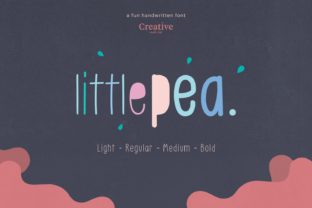
In the expansive toolkit available for digital designers and creative thinkers, some instruments stand out not for their breadth of features, but for their focused, stylistic approach. Little Pea represents one such niche tool. At its core, Little Pea is a compact, stylized scripting application designed to facilitate the rapid transformation of design concepts into distinctive visual compositions. Its primary function is to serve as a bridge between an initial idea and a tangible, eye-catching visual output, operating with a specific aesthetic and procedural methodology.
This article provides an objective evaluation of Little Pea, examining its potential utility, inherent characteristics, and the practical considerations one must weigh when contemplating its use. Our aim is to help you determine whether this unique script aligns with your specific creative workflow and project goals.
Core Characteristics and Potential Appeal
Little Pea is not a full-featured graphic design suite or a complex animation engine. Instead, it is a focused script or small application built around a particular visual style. The term "unique style" is central to its identity; the tool imposes or encourages a specific aesthetic outcome. This could involve particular geometric forms, color palettes, rendering techniques, or compositional rules. The appeal of Little Pea lies precisely in this constraint. For individuals seeking to generate visually coherent mock-ups, mood boards, or concept art quickly, a tool with a built-in style can dramatically accelerate the process, bypassing the need to define foundational visual parameters from scratch.
Someone might be interested in Little Pea for several key reasons. First is speed in ideation. When brainstorming multiple visual directions for a project, being able to swiftly generate styled variations can be invaluable. Second is style consistency. The script ensures that outputs maintain a coherent look, which is beneficial for creating series of images or establishing a preliminary project identity. Third is the potential for serendipitous discovery. Working within a defined but possibly unexpected style can lead to creative outcomes the user might not have initially envisioned, pushing ideas in novel directions.
Evaluating Benefits and Tradeoffs
Using Little Pea offers distinct benefits, but these come with inherent tradeoffs that must be acknowledged.
Primary Benefits
- Rapid Prototyping: The primary benefit is the ability to turn abstract ideas into concrete visuals almost immediately. This can shorten the feedback loop in early project stages.
- Lower Skill Barrier: For those less proficient in traditional design software, a script like Little Pea can produce polished-looking results without requiring deep technical expertise in tools like Adobe Illustrator or Blender.
- Creative Catalyst: The enforced style can break designers out of habitual patterns, serving as a catalyst for fresh creative thinking.
- Focused Output: It eliminates ambiguity about the initial visual direction, providing a clear, styled starting point for further refinement or discussion.
Important Tradeoffs and Considerations
- Style Limitations: The most significant tradeoff is the limitation imposed by the tool's inherent style. If the project's final vision diverges from what Little Pea produces, its utility becomes confined to early ideation only.
- Control vs. Automation: Users surrender a degree of fine-grained control. While you guide the initial idea, the script determines many stylistic execution details. This can be a positive or a negative depending on the need for precision.
- Integration Considerations: Outputs from Little Pea are likely starting points. Consider how these visuals will integrate into your broader workflow. Will they need to be recreated in other software for final production? This adds a potential step.
- Learning the Tool's Logic: While simpler than a full software suite, Little Pea will have its own logic and parameters to learn. Maximizing its value requires understanding how inputs map to its stylistic outputs.
Situations Where Little Pea is a Strong Fit
Little Pea is particularly well-suited for specific scenarios within the creative process.
First, it is a strong fit for initial concept exploration and pitching. When a designer or agency needs to present multiple distinct visual directions to a client or team at the very outset of a project, using Little Pea can generate a portfolio of styled concepts efficiently, making the pitch more visual and tangible.
Second, it excels in environments valuing speed and volume over granular customization. For example, in a marketing team brainstorming campaign imagery, or a game developer sketching out rapid environment concepts, the tool's ability to produce numerous variations quickly is paramount.
Third, Little Pea can be excellent for personal projects or artistic experimentation where the goal is exploration and play. An artist might use it to jumpstart a new series of work, embracing its unique style as a foundational element.
Finally, it could serve as a educational or teaching tool to demonstrate how small changes in input parameters can affect visual output, helping students understand design principles in a constrained, observable environment.
When Alternatives Might Be Worth Considering
While Little Pea has clear strengths, other tools or approaches may be more appropriate depending on your requirements.
If your project demands complete stylistic control from the outset, traditional graphic design software like Adobe Creative Suite or open-source alternatives (e.g., Inkscape, GIMP) are the standard choice. They offer unlimited flexibility, though they require more time and skill.
For projects requiring high-fidelity, production-ready assets immediately, starting in a tool like Little Pea may introduce an unnecessary intermediate step. It might be more efficient to begin directly in the software used for final asset creation.
If the unique style of Little Pea does not align with the brand identity, tone, or aesthetic requirements of your project, then its utility is limited. In this case, a more neutral or flexible tool is a better fit.
Additionally, for complex, multi-element designs involving intricate layouts, typography, and interaction, Little Pea’s focused scope might be too narrow. Comprehensive UI/UX design platforms (e.g., Figma, Sketch) would be necessary to address all aspects of the design challenge.
Practical Decision-Making Insights
To determine if Little Pea aligns with your goals, conduct a practical self-assessment. Begin by clearly defining the stage of your project. Is it the fuzzy front end of ideation, or are you moving into detailed specification? Little Pea is predominantly an early-stage tool.
Next, audit your own skills and resources. Do you have the time and proficiency to build styled concepts manually from a blank canvas? If not, a guided tool like Little Pea could fill a gap. Conversely, if you possess advanced skills in a flexible software package, you might replicate the speed of Little Pea with custom templates or actions you’ve built yourself.
Critically evaluate the importance of stylistic alignment. Can you embrace the specific visual language of Little Pea, either as a final direction or as a provocative starting point? If your project has rigid brand guidelines, this mismatch could be a deal-breaker.
Finally, consider your process for moving from concept to final deliverable. Map out how a visual generated by Little Pea would transition into your production pipeline. If the transition seems smooth—perhaps by using the output as a direct reference or mood board—then the tool integrates well. If it seems to create a disjointed step requiring recreation of work, its value diminishes.
In summary, Little Pea occupies a specific niche: it is a catalyst for rapid, styled visual ideation. Its value is not in universal applicability, but in its focused ability to solve a particular problem—transforming a nascent idea into an eye-catching visual with a coherent aesthetic quickly. By objectively weighing its benefits of speed and creative provocation against its tradeoffs of stylistic limitation and integration needs, you can make an informed decision on whether this unique script is a worthwhile addition to your creative toolkit.