The Hamilton Script: Crafting Identity in a Digital Marketplace
In a world saturated with digital communication, the power of a distinctive visual identity has never been more critical. For professionals, creators, and businesses seeking to carve out a unique space, the tools they choose to embody their brand are paramount. Among these tools, signature scripts hold a special place, bridging the personal with the professional. Hamilton, and its refined counterpart The Hamilton, represent this nexus—an elegant signature script designed not merely as a font, but as an instrument for crafting perception.
Beyond the Font: Understanding Hamilton’s Purpose
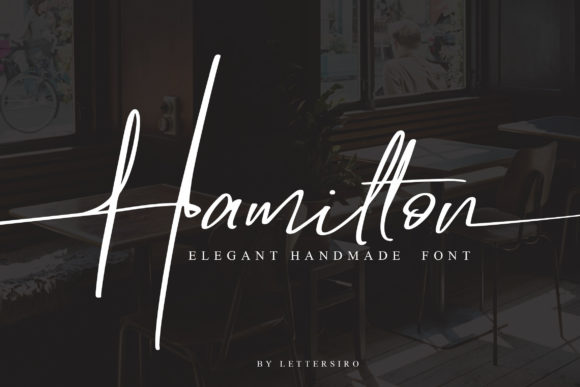
At its core, Hamilton is a typeface, but its application reveals a deeper function. It is a carefully constructed script font that mimics the fluidity and grace of hand-penned calligraphy, yet with the precision and consistency required for digital use. The design of Hamilton avoids the extreme flourishes of some decorative scripts, instead offering a balanced elegance that conveys sophistication without sacrificing clarity. This makes The Hamilton particularly suited for its namesake purpose: signatures. A digital signature using Hamilton carries a weight of intentionality, transforming a simple legal or formal requirement into a moment of brand reinforcement.
However, its utility extends far beyond signing documents. The script finds its place as a watermark on photography, a delicate yet assertive mark of ownership and artistry. In business designs, it elevates logos, certificates, invitations, and premium packaging. For entrepreneurs and freelancers, integrating Hamilton into their stationery, website headers, or product labels instantly communicates a level of care and quality, setting their offerings apart in a crowded market.
Alignment with Modern Creative and Business Trends
The resurgence of interest in elegant script fonts like Hamilton is not an isolated aesthetic trend. It is intimately connected to several broader developments in the marketplace. Firstly, the democratization of design tools has empowered individuals and small businesses to create professional-grade visuals without agency budgets. With access to high-quality fonts, they can now build sophisticated identities themselves. Hamilton fits perfectly into this workflow, being readily available and easily implementable across standard design software.
Secondly, we observe a counter-trend to minimalism. While clean, sans-serif typography remains dominant for UI and body text, there is a growing desire for elements that introduce personality and human touch. In branding, this manifests as a need for “accent fonts” that provide warmth and distinction. Hamilton serves this role excellently, offering a touch of classic elegance that contrasts beautifully with modern, minimalist layouts.
The Human Element in Digital Expression
Furthermore, as digital interactions become more pervasive, there is a pronounced effort to reintroduce the human element. Consumers and clients seek connection and authenticity. A script font like Hamilton, which echoes handwriting, inherently carries a more personal, crafted feel than a geometric typeface. It suggests that behind the brand is a person, not just an algorithm. This is crucial for creators, consultants, and luxury brands where trust and personal rapport are key components of the value proposition.
Why Hamilton Captures Attention
The specific characteristics of Hamilton answer changing needs and preferences in professional communication. The digital economy has increased the volume of “touchpoints” a brand has with its audience—every email footer, every social media graphic, every digital document is an opportunity for reinforcement. Consistency across these touchpoints is vital, but so is the ability to signal value at key moments.
For instance, a freelance graphic designer might use a clean, modern font for their website body text but employ The Hamilton for their contract signatures and proposal headers. This creates a subtle hierarchy, emphasizing the most important and formal documents. Similarly, a photographer using Hamilton as a watermark is doing more than claiming copyright; they are adding a final artistic flourish to their work, framing it as a completed piece of art rather than just a digital file.
The changing expectations around workflow efficiency also play a role. Professionals need assets that are versatile and low-friction. Hamilton is a script that works; it doesn’t require excessive tweaking or special handling to look correct in various applications, from print to web. This practicality makes it a reliable choice for non-designers and busy professionals who need elegance without complexity.
Practical Applications and Observable Impact
Observing how Hamilton is utilized in the field offers concrete insights into its relevance. Consider the rise of digital stationery and online invoicing for small businesses. Platforms that offer these services often include font choices for customization. Selecting Hamilton for the business name on an invoice transforms a mundane transactional document into a brand experience, potentially enhancing the client’s perception of the service.
In the realm of personal branding, content creators on platforms like YouTube or Instagram use text overlays and intro graphics. A script like Hamilton for the channel name or a recurring tagline adds a layer of polished professionalism that stands out against the often casual visual language of social media. It signals intentionality and investment in one’s craft.
Another practical observation is in the world of digital credentials and certificates. Online learning platforms, corporate training modules, and professional associations issue certificates of completion. Using an elegant signature script like Hamilton for the recipient’s name, the issuing authority’s signature line, or the certificate title lends gravitas and a sense of tradition to these digital accolades, increasing their perceived value.
Technology’s Role in Script Accessibility
The relevance of Hamilton is also bolstered by underlying technology trends. Improved screen resolutions and rendering capabilities mean that delicate script fonts display beautifully on all devices, removing a former barrier to their use in web design. Furthermore, the expansion of variable font technology and better cross-platform font support ensures that such typefaces behave predictably, maintaining their integrity across user experiences.
Connecting to Larger Developments: The Search for Authenticity
Ultimately, the interest in tools like The Hamilton script connects to a larger cultural and commercial development: the search for authenticity in a digitally mediated world. As automation and AI-generated content become more common, the markers of human creation and curation become more valuable. A carefully chosen, elegant script is a deliberate design decision. It is a signal of human oversight, taste, and effort.
For the professional, marketer, or entrepreneur, this is a critical insight. Their visual choices are not merely decorative; they are communicative. Hamilton, when applied thoughtfully, communicates a message of refinement, personal attention, and established quality. It moves a brand from being simply functional to being considered and distinguished.
In conclusion, Hamilton and The Hamilton script are more than digital assets. They are responses to a market that values both efficiency and elegance, both scalability and individuality. They meet the practical need for a versatile, elegant signature tool while satisfying the deeper desire for brands and individuals to project a crafted, authentic identity. As the digital landscape continues to evolve, the power of such nuanced typographic choices will only grow, making the intelligent selection of a script like Hamilton a significant, yet accessible, step in defining one’s place in the world.