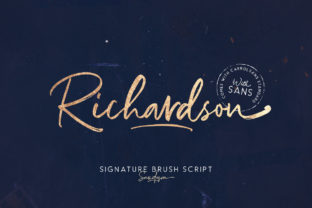
Richardson Script: The Elegant Signature Style for Modern Designers
In a digital landscape saturated with clean, geometric fonts, a distinct point of view can be your greatest asset. Richardson script arrives as that quiet statement of confidence. It isn't merely another brush script; it's a carefully crafted signature style that carries the weight of personal touch and elegant intention. For professionals, creators, and entrepreneurs looking to differentiate their visual communication, the unique, striking look of Richardson offers a direct path to memorability.
The Practical Power of a Signature Style
Why does a font like Richardson matter beyond its aesthetic appeal? The answer lies in its ability to solve specific communication challenges. When your goal is to convey authenticity, sophistication, or a bespoke quality, standard typefaces often fall short. Richardson’s flowing, connected letters emulate the grace of a handwritten signature, instantly adding a layer of human connection to any project. This isn't about decoration; it's about using typography as a tool to strengthen your message’s emotional resonance and credibility.
Consider the entrepreneur launching a small luxury brand. The logo isn't just a name; it's the first encapsulation of the brand's soul. Using Richardson for the logotype can immediately suggest craftsmanship and attention to detail, values that resonate deeply with a discerning audience. The font performs a functional role here, translating abstract brand values into a tangible visual form that speeds up audience recognition and connection.
Where Richardson Elevates Everyday Projects
The versatility of Richardson stems from its balanced character. It possesses enough flair to be striking, yet retains a controlled flow that prevents it from feeling overly casual or messy. This makes it applicable across a surprising range of practical scenarios.
For Logos and Brand Marks
As discussed, Richardson is a formidable choice for logos, particularly for businesses in lifestyle, fashion, beauty, and artisan sectors. Its style supports a narrative of personal touch. A freelance graphic designer might use Richardson for their own studio logo, communicating a service that is tailored and artistic. The key is pairing it appropriately—often with a simple, neutral sans-serif for supporting text to ensure readability and balance.
Transforming Wedding and Event Stationery
Wedding invitations, ceremony programs, and place cards are deeply personal artifacts. Richardson script can unify these elements with a cohesive, elegant thread. By setting the couple's names or key headings in Richardson, a designer creates an instant theme of romance and celebration. This solves a common problem for busy couples or event planners: achieving a high-end, custom look without the time and cost of actual custom calligraphy for every item.
Highlighting Quotes and Key Messages
Bloggers, educators, and publishers can use Richardson to draw attention to pivotal quotes or section headers within longer texts. In a digital article or a printed booklet, a key insight rendered in Richardson breaks the monotony of body text and emphasizes the importance of the thought. This improves the reader's experience by creating visual hierarchy and can increase the retention of that information.
Fashion and Apparel Design Applications
Within fashion design, typography on tags, labels, or even graphic tees contributes to the brand story. Richardson can be used for a clothing line's name on its hang tags, suggesting a label that values artistry. It’s a subtle but effective way to differentiate a product on a crowded retail shelf, where every element of presentation contributes to perceived value.
Who Benefits Most from Embracing Richardson?
While any designer can access Richardson, its value is particularly pronounced for certain audiences. Freelancers and small business owners often need to project a premium image with limited resources. Richardson acts as a ready-made asset that elevates their deliverables. Marketers and content creators working in fields where emotion and connection drive engagement—like wellness, coaching, or creative services—will find it a useful tool to visually underscore their message's tone.
Hobbyists and DIY designers tackling personal projects, such as anniversary gifts or family history books, benefit from its ease of use. It provides a professional outcome without requiring expert lettering skills. However, it’s worth noting that Richardson, like any distinctive script, requires thoughtful application. It is not a general-purpose font for body text or lengthy paragraphs. Its strength is in accent and headline roles.
Implementing Richardson with Strategic Awareness
To achieve the best results with Richardson, a few practical considerations are advisable. First, pay close attention to size and spacing. At very small sizes, the intricate connections may lose clarity, so ensure it's used at a scale where its beauty is visible. Second, consider color contrast. Placing Richardson in a light color on a dark background (or vice versa) ensures its flowing forms are fully legible.
It’s also wise to compare Richardson against other script options when embarking on a major project like a brand identity. Its specific character—somewhat confident yet refined—may be perfect for a modern boutique but perhaps less fitting for a child’s playful brand. Assessing the font’s personality against your project’s core message is a crucial step. Richardson excels when the goals are sophistication, personal connection, and stylish authority.
Ultimately, Richardson script is more than a digital file; it's a design partner. It offers a shortcut to injecting grace and individuality into work that might otherwise rely on sterile, default typography. By choosing it for appropriate highlights, you save time searching for the right visual tone, support your creative vision with a coherent tool, and most importantly, communicate with an audience in a way that feels both striking and authentically human. In a world of rapid communication, that signature touch can be the detail that makes your work not only seen, but remembered.